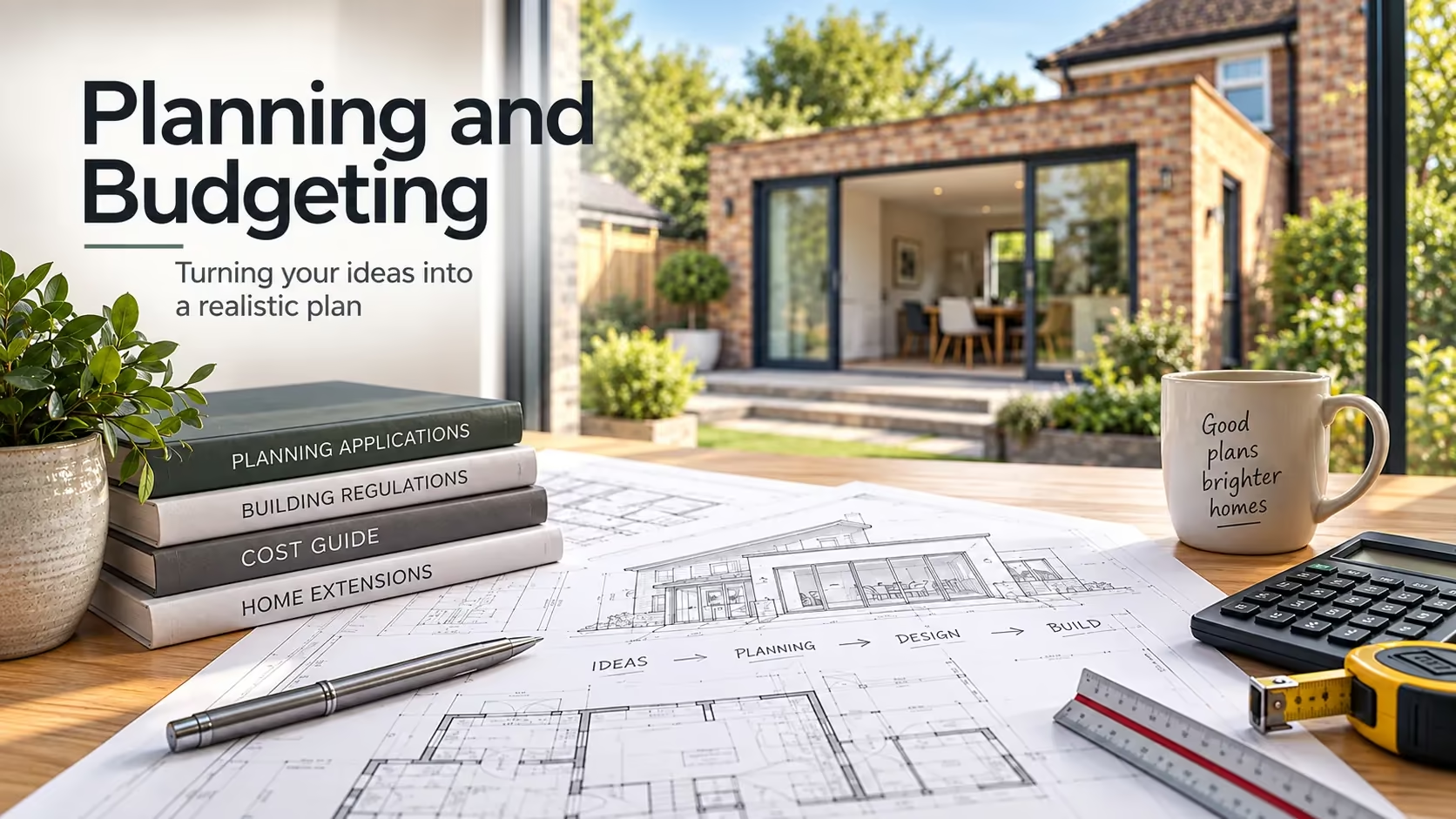
Planning and budgeting are essential steps for anyone looking to build, extend, or adapt their home or business premises.

Planning a house extension is an exciting step for many homeowners, but one of the most important — and often overlooked — aspects of the process is the building contract between the homeowner and the builder.
A clear written contract protects both parties and helps ensure the project runs smoothly from start to finish.
Without a written agreement, misunderstandings can easily arise about costs, responsibilities, changes to the work, and how problems should be resolved.
A written building contract:
Several standard forms of domestic building contract are commonly used in the UK for house extensions and residential alterations. The three most frequently encountered are outlined below.
This is one of the most widely recognised construction contracts in the UK and is often used where architectural drawings and specifications have been prepared for the project.
The JCT Minor Works Building Contract is normally administered by an appointed architect or Contract Administrator. This is a separate professional role involving responsibilities such as certifying payments, instructing variations, assessing extensions of time and confirming practical completion.
The contract also provides for a rectification period during which defects arising from work not carried out in accordance with the contract can be identified and addressed under its provisions.
Because it provides structured procedures for payments, variations, and extensions of time, it is often preferred on projects where a professional consultant is administering the construction phase.
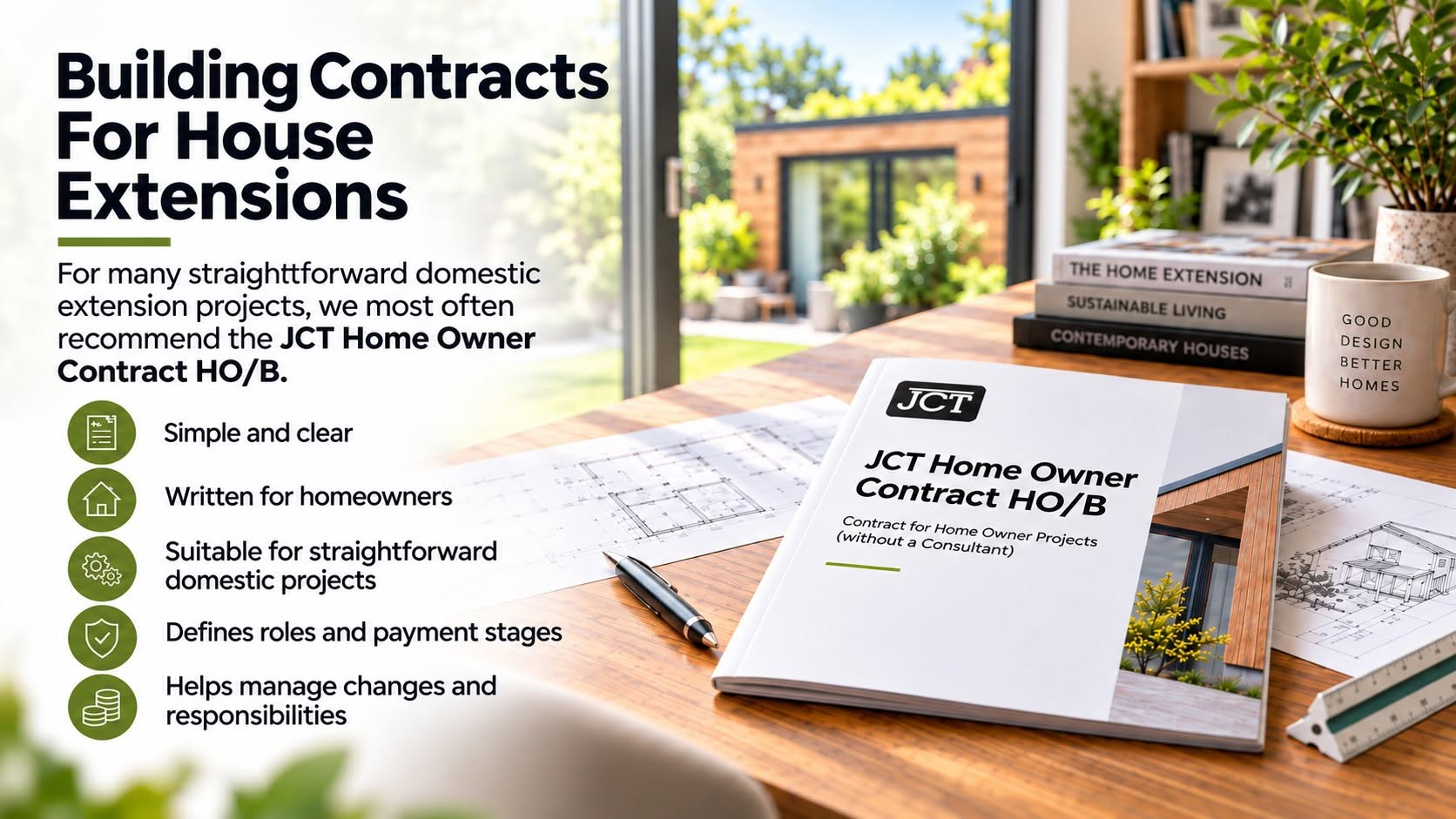
The JCT Home Owner Contract was specifically designed for residential clients and is written in simpler language than many traditional construction contracts.
Two principal versions are available:
For straightforward domestic extensions, HO/B can be an appropriate option where the homeowner intends to deal directly with the builder and no consultant is appointed to administer the contract.
The Federation of Master Builders provides a range of domestic building contracts designed for agreements between homeowners and building contractors. These include standard domestic contracts and alternative forms suited to particular payment arrangements or types of work.
They are written in straightforward language and address matters such as the scope of works, payment arrangements, responsibilities and procedures for resolving disputes.
The appropriate form should be selected according to the nature and complexity of the proposed work.
At Misbourne Design Associates Limited, our primary role is to assist clients with the design, planning, and technical aspects of their extension projects.
Contract administration and construction-stage supervision do not form part of our standard architectural design appointment. Where such services are required, they must be discussed and agreed separately, including the responsibilities involved and any additional professional fees.
Our experience over many years has shown that most homeowners prefer to deal directly with their chosen builder once the design work and approvals are complete.
For that reason, the contract we most commonly recommend for domestic extension projects is the JCT Home Owner Contract HO/B. This allows the homeowner and builder to enter into a clear written agreement while keeping the administration straightforward.
Where a client requires a more formally administered construction contract, a JCT Minor Works contract, or another appropriate form, may be considered together with the separate appointment of a suitably qualified Contract Administrator.
Entering into a written building contract is one of the most important steps when undertaking a house extension.
It protects both the homeowner and the builder and ensures there is a clear understanding of:
Selecting the appropriate contract will depend on the size and complexity of the project and the level of professional involvement the client wishes to have during construction.
This article provides general guidance only and does not constitute legal or contractual advice. The appropriate form of building contract will depend on the nature and complexity of the project, and the relevant contract edition should be checked before use. Independent professional advice should be sought where appropriate.
Planning and budgeting are essential steps for anyone looking to build, extend, or adapt their home or business premises.
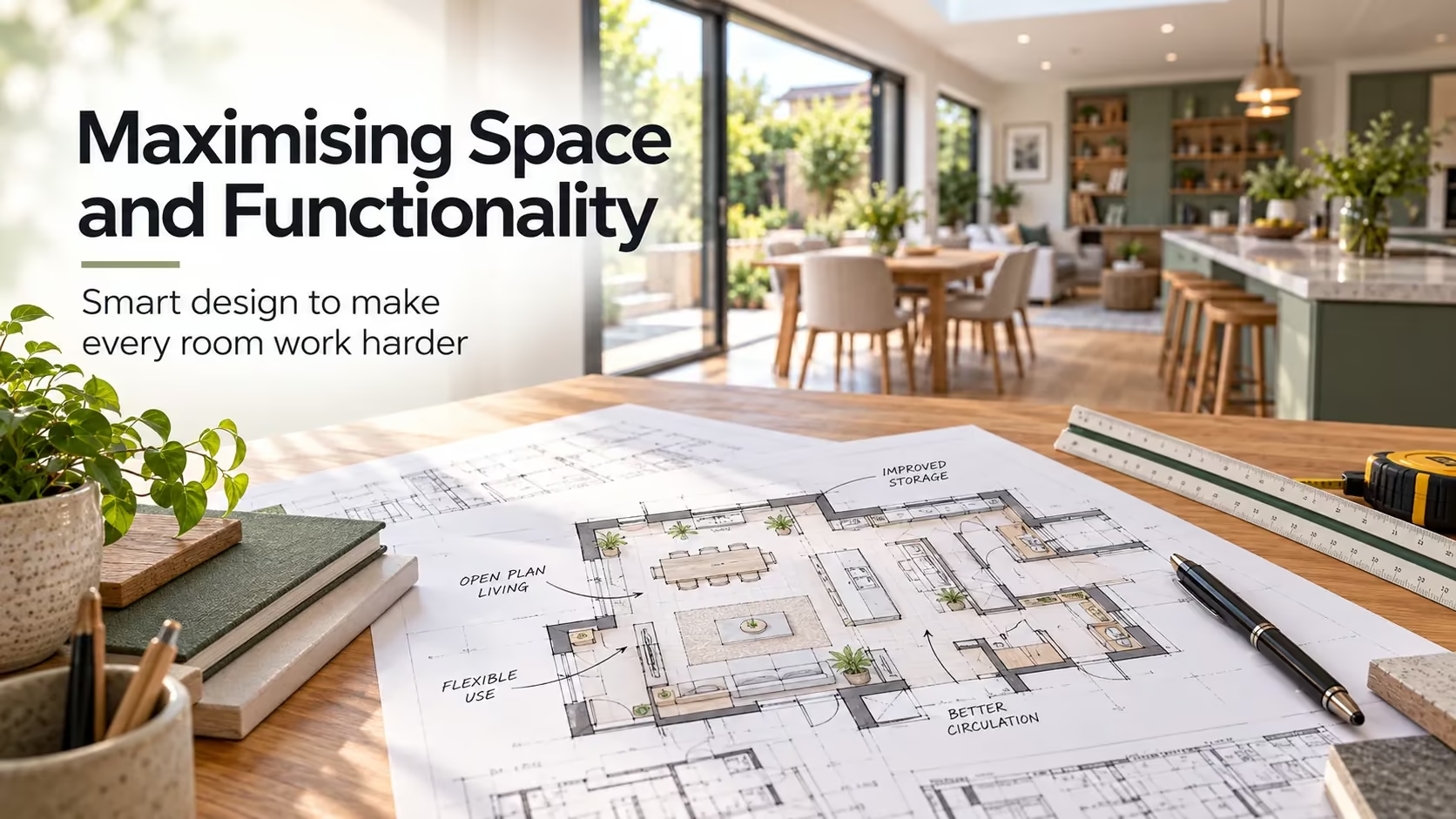
Making the most of your available space is key to creating a home or business premises that is both practical and inviting.
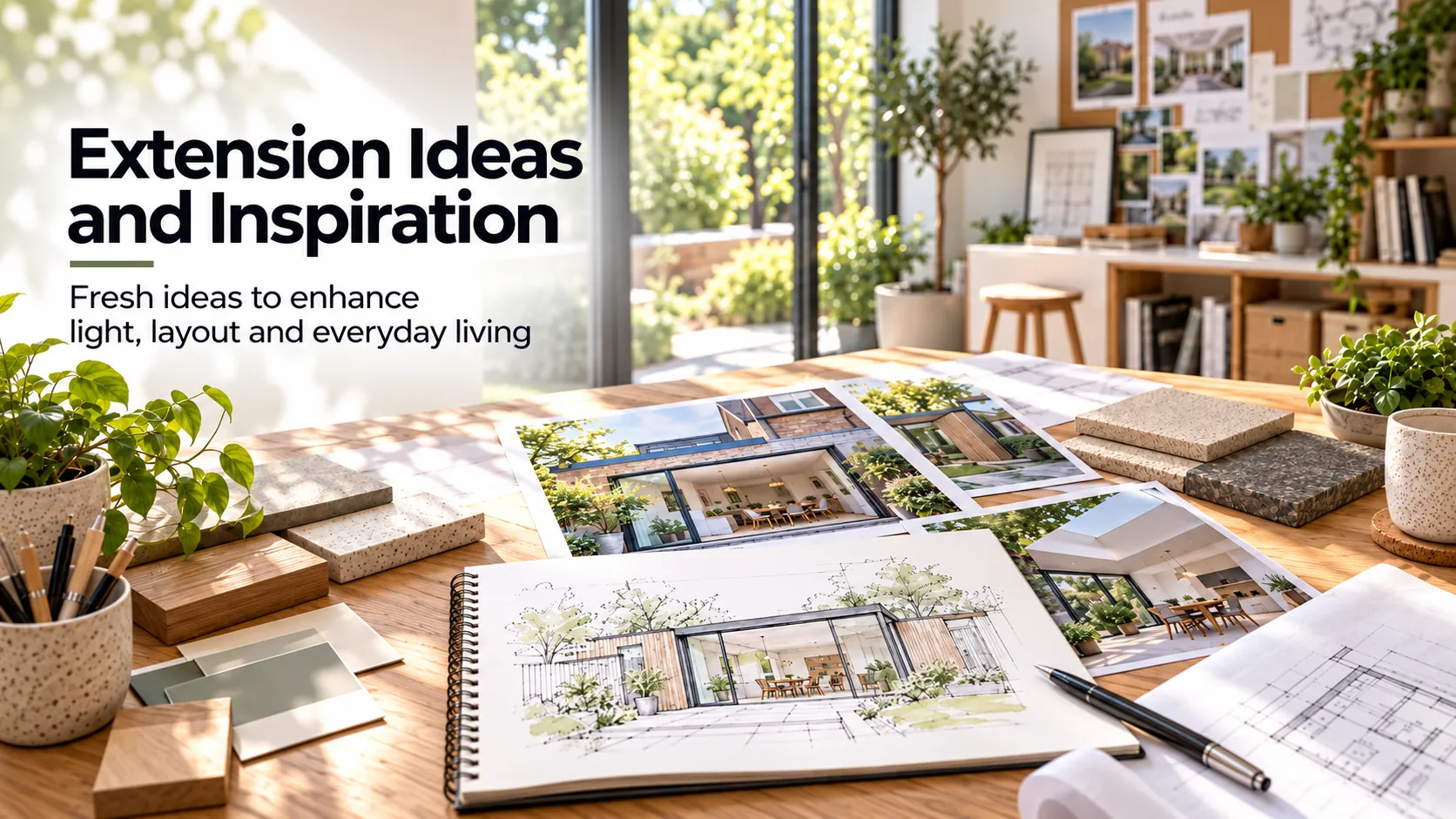
Explore practical and imaginative extension ideas that can create additional living space, improve functionality and help your home better suit your lifestyle.